


Stories
CMU professor gives light to the darkness of history with WSO commission
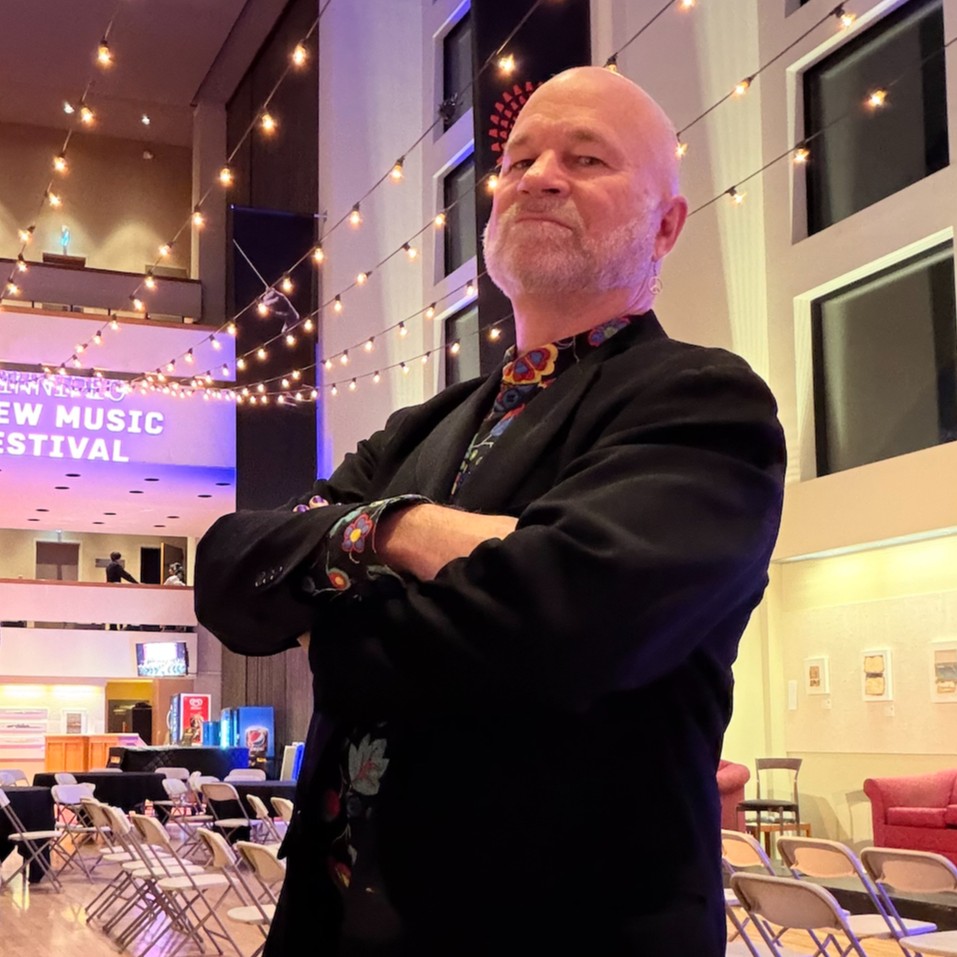 Neil Weisensel, CMU's Associate Professor of Music, wrote an orchestral composition recently performed by the Winnipeg Symphony Orchestra at the Winnipeg New Music Festival.
Neil Weisensel, CMU's Associate Professor of Music, was recently commissioned to write an orchestral composition to be performed by the Winnipeg Symphony Orchestra (WSO). "Centuries of Hope: Variations + Theme," was performed by the WSO at the Winnipeg New Music Festival on January 27, 2026.
Inspired by composers such as Karlheinz Stockhausen and Frederick Rzewski, whose work responds to the rise of fascism in the 20th century, "Centuries of Hope" is itself a tribute to citizens' strength and resilience in the face of authoritarianism.
"For centuries, humans have suffered under dictators, but against difficult and seemingly insurmountable odds and intractable situations, the people have always persevered," Weisensel says.
"Centuries of Hope" was one of four pieces performed during the show, WNMF 3: Beyond Horizons. Weisensel says the connective tissue between all the compositions was hope.
Traditionally, a composer would structure a piece around a thematic melody, then alter that theme in different ways to add diversity to the sound.
"I wanted my composition to turn the 'Theme and Variations' form on its head, having the theme appear at the conclusion of the piece, instead of at the beginning as is customary. For me, the inevitability of having the theme follow the variations reflects the inevitability of how every dictator falls, sooner or later," Weisensel says.
The origins of "Centuries of Hope" can be traced back nearly 30 years. Although he had little official training as a composer, in 1991, he met the French-Romanian poet George Astalos in Paris.
Shortly thereafter, the two began working on an opera together.
Although that project never went to production, Weisensel did emerge from that experience with a key piece of music: the main theme that would become "Centuries of Hope."
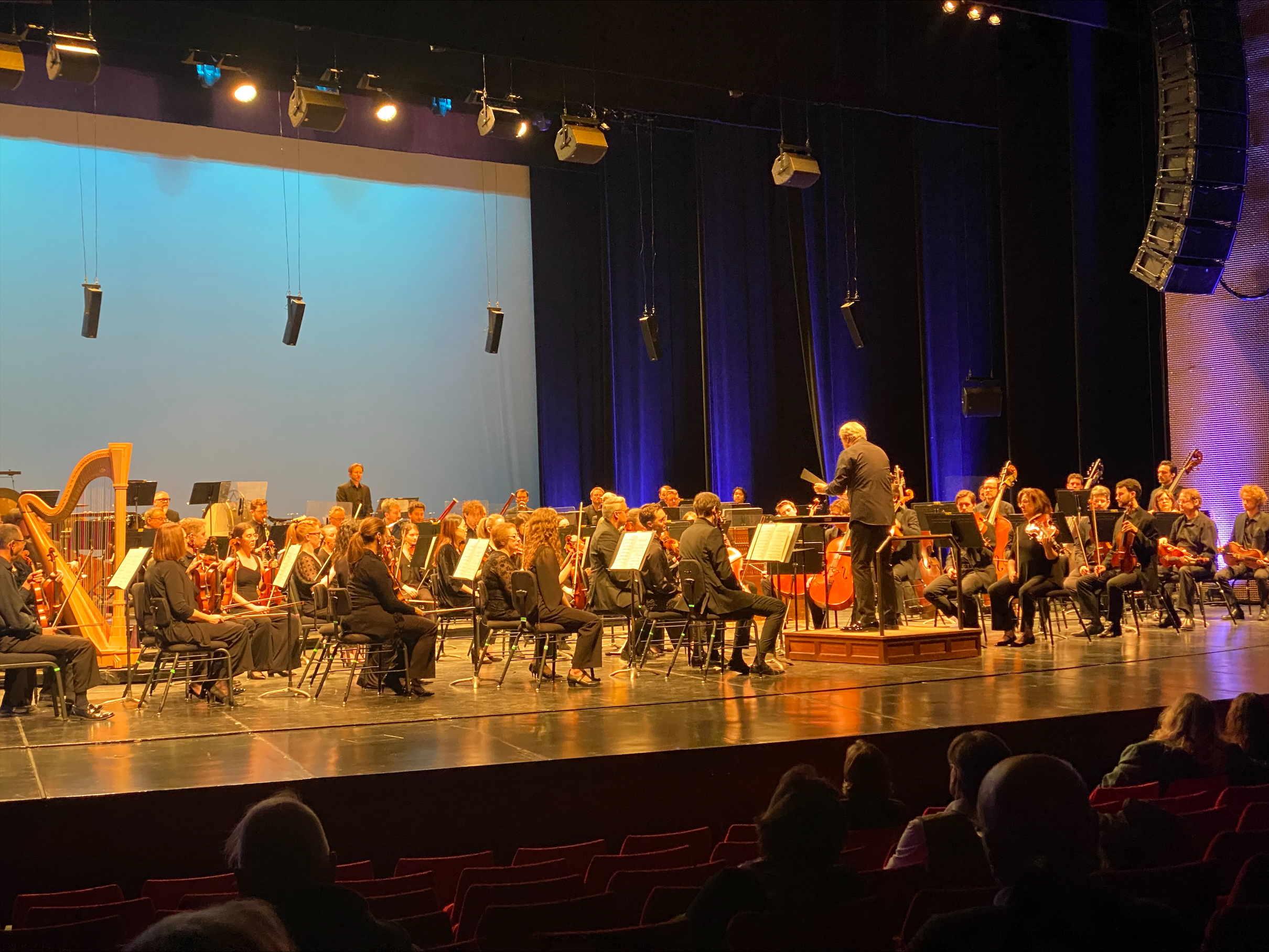
WSO performs Neil Weisensel's
"Centuries of Hope"
Finishing the piece, says Weisensel, was just a matter of finding the right opportunity. "Having a commission from the WSO is a giant honour," he says, so adding the variations to the theme was just a matter of writing down the music in his head.
"I'm a sum total of all the music I've ever heard, my own and other people's," he says. "I listen to really a tremendously wide variety of music, and it all finds its way into the stuff that I create."
When it comes to teaching, Weisensel says he compels all his theory students to attend a performance at the Winnipeg New Music Festival, where they can analyze and study the interaction of instruments in various compositions.
He says that, as composers, CMU students need to deeply understand all the instruments that make up an orchestra. Even if they don't play them, they need to understand their breadth and write for them.
"I think it's important for students to see that I'm working in the community and I'm active and I'm not just siloed in some ivory tower. I'm actually doing the work, have done the work and continue to do the work. I'm very active still as a composer," Weisensel says.
 Print This Article