
Dr. Roberta Bondar, Canada's first female astronaut, brings a view from space down to Earth at CMU
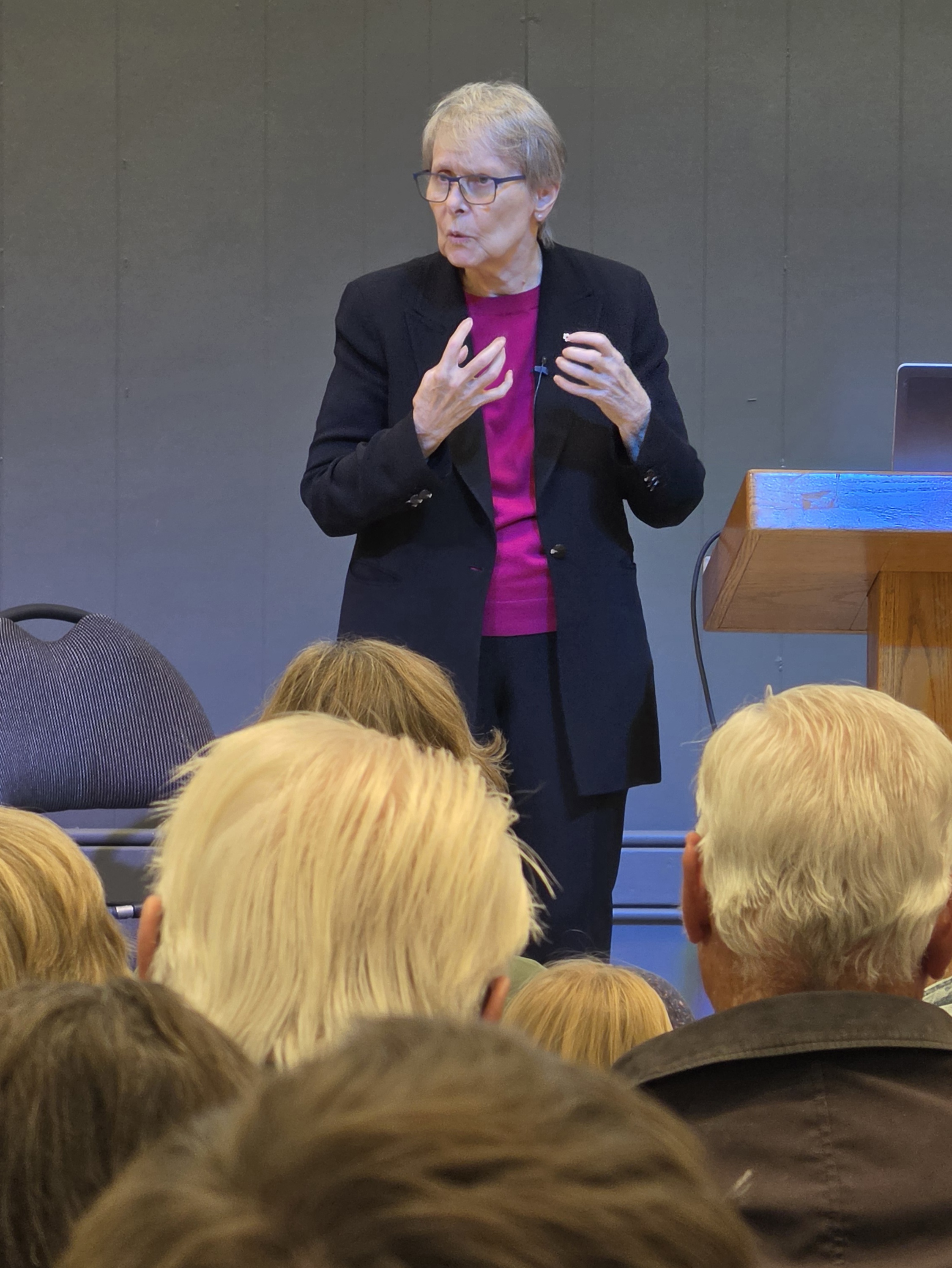 Dr. Roberta Bondar speaks about the connections between science, art, and the natural world during CMU’s Face2Face event on September 11.
Seeing Earth from space changed the way Dr. Roberta Bondar understood the natural world.
Canada's first female astronaut shared that perspective at Canadian Mennonite University (CMU) on September 11, when she spoke at a Face2Face event exploring the intersections of science, art, and the environment.
She told stories of her time in space, taking trips across the globe, photographing and advocating for the environment, and drawing on her multifaceted experience to help change the way we engage with the natural world.
Although Bondar grew up spending time outdoors and camping during every summer holiday, she said travelling to space gave her "a different connection with the natural world."
"It really got me into much more of an international mindset than I had before," Bondar said. "It was the fact that Canada can't be separated from the world in terms of its landscape or the creatures that are in the landscape."
That perspective shaped much of Bondar's work since her 1992 space flight, including her photography and environmental advocacy.
Her latest exhibition, Patterns and Parallels: The Great Imperative to Survive, brings those interests together through photographs of the Whooping Crane, Lesser Flamingo, and Piping Plover, highlighting their migration patterns and the landscapes on which they depend. The exhibition is currently on display at Mennonite Heritage Centre (MHC) Gallery.
Through the combination of photos from space, sky, and Earth's surface, Bondar's photographs encourage the viewer to consider the ethical implications of habitat loss and the integration of the natural world and human interference.
In a statement accompanying the exhibition, Bondar said her photographs "reveal Earth's natural environment, through the lenses of astronaut, medical doctor, photographer, scientist, writer, and zoologist to create visual stories of hope and inspiration that connect and reconnect people to the natural world of Earth."
Her pursuit of those images has taken her around the globe, from the Arctic and the Florida Everglades to Kenya and the deserts of North Africa and the Southern United States. She has photographed while hanging out of helicopters 2,000 feet in the air and hiked to some of the most remote landscapes on Earth.
Bondar repeatedly described those experiences as "extraordinary".
She said it's all in an effort to fuse together art and science, something Rachel Krause, Associate Professor of Biology at CMU, highlighted as she introduced her at the Face2Face lecture.
"Her work over the decades has come to span both sciences and the arts and why it is so important for us to think all across these interdisciplinary divides." Krause said.
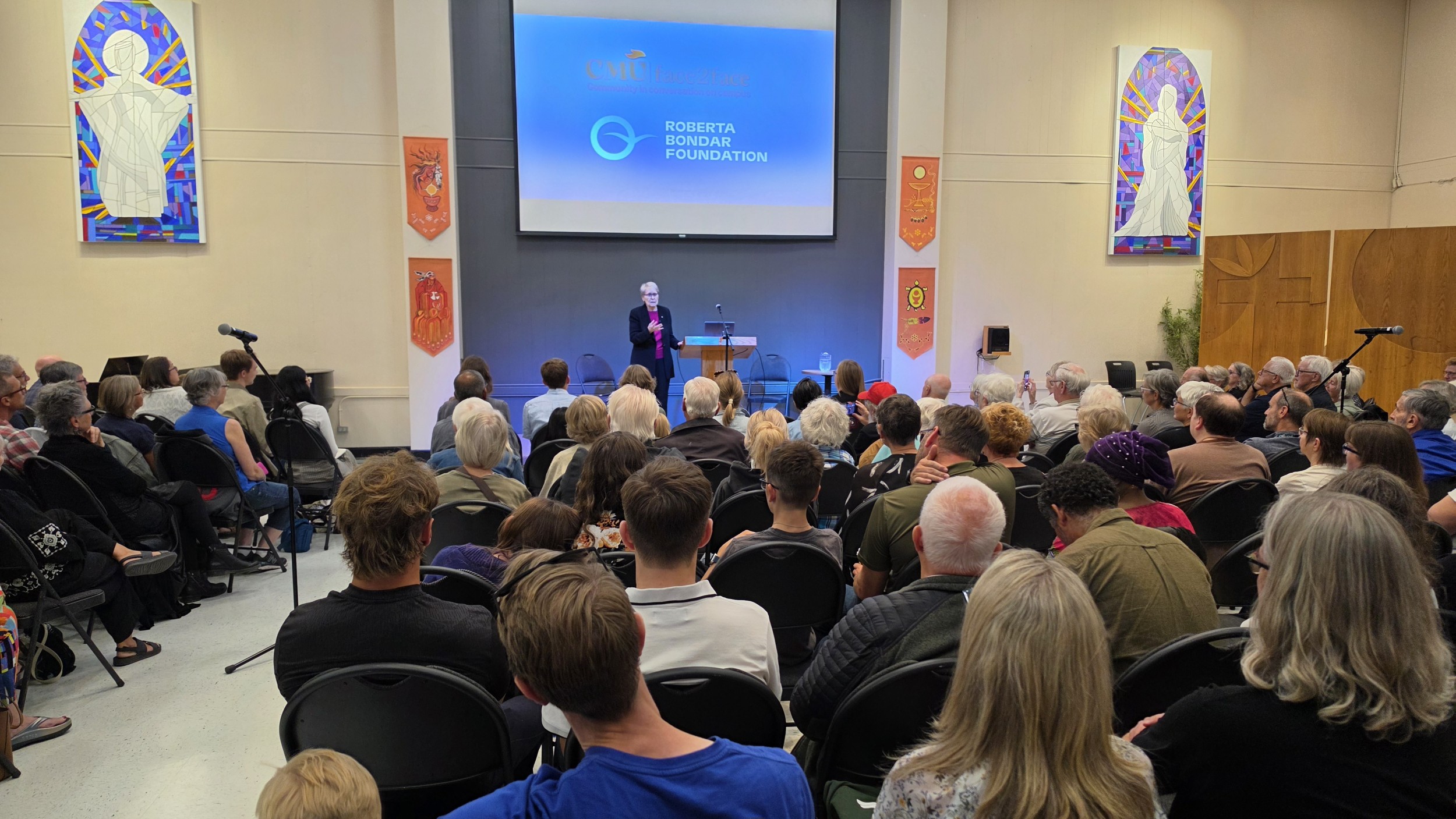 Dr. Roberta Bondar addresses a full house at the September 11 Face2Face event, sharing how her experiences as an astronaut, scientist, physician, and photographer have shaped the way she sees the natural world.
"When we are considering some of the most pressing issues of our time—issues like habitat conservation, species loss, climate change—it is even more vital we engage in multiple ways of knowing."
The interdisciplinary approach has particular resonance at CMU, where the evening also featured two alumni whose work connects with themes in Bondar's photography.
Asher Warkentin (BSc 2026 in Biology) has spent summers banding birds and conducting wildlife surveys across Canada. Chantel Mireau, a Winnipeg-based visual artist, explores themes of labour and time in her work. Both are avid birders and connected their own experiences with Bondar's exploration of birds, habitats, and migration.
Following the lecture, guests moved to MHC Gallery for the opening of Patterns and Parallels, which features more than a dozen of Bondar's photographs.
Bondar described the exhibition space as "phenomenal" and said she's excited for students and others in the CMU community to engage with the images in a way that challenges us to protect life that cannot protect itself.
Patterns and Parallels: The Great Imperative to Survive is on display at MHC Gallery until October 10. Learn more here.