
CMU students put learning to work
 CMU students Cassidy Froese (left) and Alyssa Doneza put their classroom learning into practice through work-integrated learning placements with Trans Manitoba and Peg City Basketball, respectively.
For Cassidy Froese, a summer work-integrated learning placement brought social science and communications together in ways she had not expected. For Alyssa Doneza, it revealed just how much running a basketball organization depends on relationships.
Their experiences are two examples of how Canadian Mennonite University (CMU) students are taking classroom learning into workplaces through work-integrated learning (WIL) placements.
Work-integrated learning is part of every CMU undergraduate program. More than 1,400 students have completed placements with over 500 organizations in the 25 years since the program began, working in offices, fields, and other diverse environments around the world.
The Ens Centre for Career and Vocation supports students as they explore how their studies, interests, and skills can connect with work and beyond the classroom.
Cassidy Froese
When Cassidy Froese first started attending CMU in 2021, she tried as many different classes as she could.
"In my first year, I used up every single one of my elective slots, took one of every [course]," Froese says.
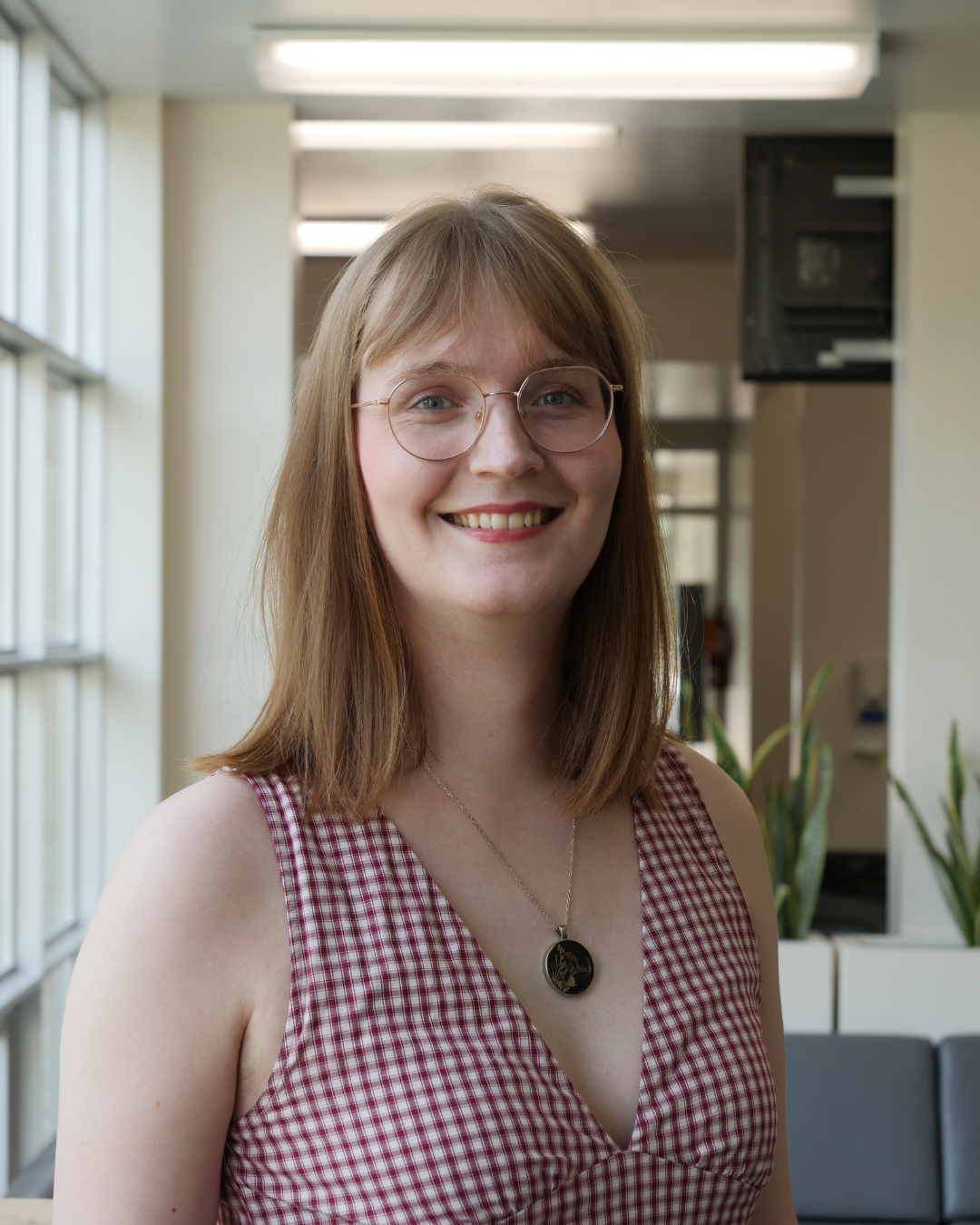 Cassidy Froese spent her work-integrated learning placement with Trans Manitoba this past summer.
She was drawn to the theory of psychology and the hands-on work of communications, eventually pursuing studies in social science.
Since May, her placement with Trans Manitoba as a communications coordinator has brought those different areas of study together.
Trans Manitoba is a not-for-profit organization in Winnipeg that advocates for the human rights of Two Spirit, transgender, non-binary, and gender-diverse people in Manitoba through artistic endeavours and policy reform.
Froese's main project during her placement has involved creating an online educational video about workplace inclusion and allyship for trans coworkers. She has worked as a writer, director, and producer on the project.
"Trans Manitoba is a tiny organization, so they weren't too afraid to sort of throw me in the deep end and let me figure that kind of thing out. It's been great," Froese says.
She says that some of the clearest connections to her classroom learning have come through her communications studies, from learning new software to gaining experience with production equipment such as cameras and sound gear.
But Froese is also quick to point to the value of her social science studies in her work at Trans Manitoba.
"I think that theoretical base has been really rewarding in my placement that I've been doing at Trans Manitoba," she says. "I've done a lot of communications work, and I think all that theory work has been very helpful to me because I can approach it thinking about what my audience wants and how to get that to them."
Working with an organization that advocates for marginalized groups has also shaped the way Froese thinks about the people behind statistics and data.
"If I'm looking for a statistic when I'm designing a brochure, [I'm trying] to pull one that's meaningful and accurate and representative and in alignment with what we're trying to do as an organization."
Following the two-month work-integrated learning placement, Froese was hired by Trans Manitoba and continues to work as its communications coordinator.
Alyssa Doneza
Alyssa Doneza's path into business and sports management has been anything but linear.
After initially considering a career in dentistry, Doneza discovered an interest in sports management while working as a gym supervisor for Peg City Basketball.
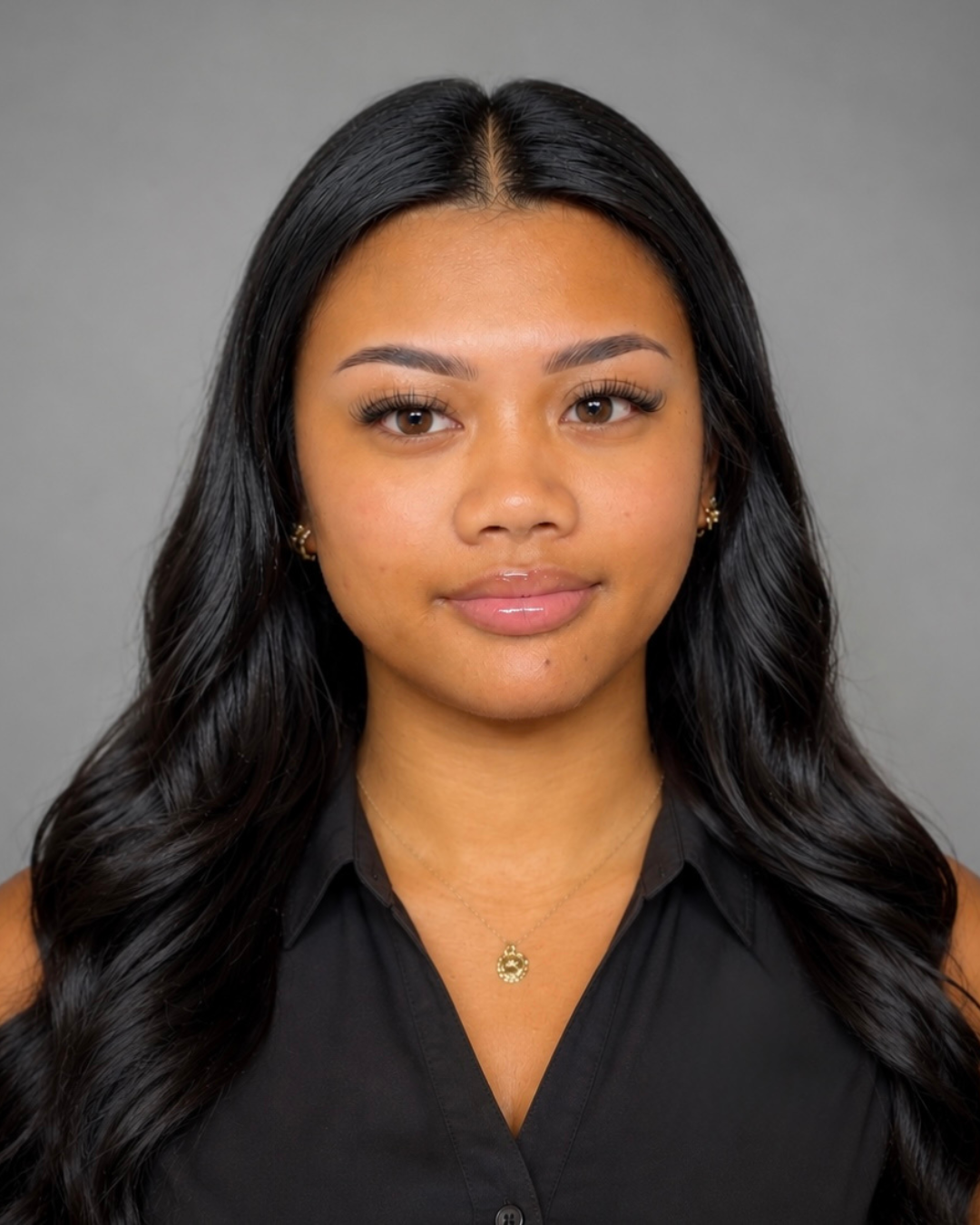 Alyssa Doneza was the program coordinator for Peg City Basketball during her work-integrated learning placement.
Now entering her fourth year at CMU, Doneza has returned to Peg City Basketball for her WIL placement as a program coordinator, a role that puts her behind the scenes of the organization's operations.
Doneza first began working for the organization as a scorekeeper before becoming a gym supervisor and eventually taking on more responsibility.
As program coordinator, she is responsible for making sure the pieces behind each game come together, from preparing equipment and coordinating staff schedules, to finalizing scores and uploading game footage.
"I was shocked by how important the community aspect of it is," Doneza says. "There are so many different people I interact with, which I wasn't expecting, like players, parents, coaches, and staff. It all connects, especially with how big the basketball scene is in Winnipeg."
Doneza says her time at CMU has helped prepare her for the people-focused nature of her placement. Before transferring to CMU, she says she "never got to interact with people and do business scenarios."
"So, classes at CMU have really prepared me for that," she says.
"You actually build relationships with people and make connections," she adds. "It helped a lot being around people."
Those connections have also helped Doneza develop skills that extend beyond the business concepts learned in class.
"[I've] learned the community aspect, the communication, the developing human, real-life interactions people skills," she says. "My communication skills have grown so much just being at CMU and forcing myself to be out there and interact with people."
Before arriving, Doneza had heard that CMU was a small, community-oriented university where it was easy to get to know people. Her experience, she says, has lived up to that expectation.
"I got to know so many different people right off the batt, which has really helped and made me feel so much more comfortable."
For Froese and Doneza, work-integrated learning has been less about stepping away from classroom learning than discovering where it can lead. Froese found a place where social science and communications could work together, and a job that continued beyond her placement. Doneza discovered that the relationships and communication skills she developed at CMU were preparing her for the people at the centre of her work.