
2026 Friesen Lecture Series | The Shifting National Identities of Mennonites in Polish/German Lands (videos)
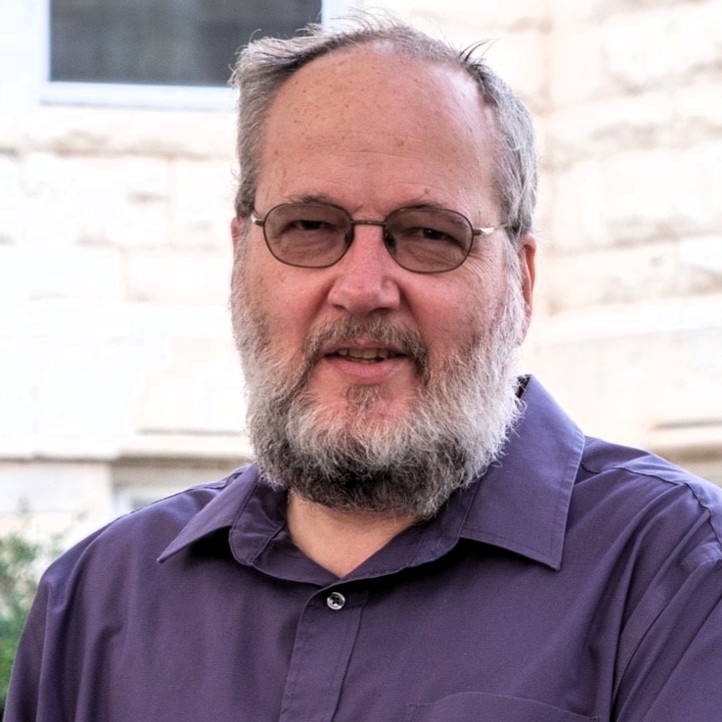
Featuring Dr. Mark Jantzen, Professor of History, Bethel College, North Newton, Kansas
January 22, 2026
- 11:00 AM | CMU Chapel (600 Shaftesbury Blvd.)
- 7:00 PM | CMU Chapel
- Both lectures will be livestreamed and available for on-demand viewing later
Dr. Mark Jantzen is a native of Nebraska and a Bethel College graduate who has lived and worked extensively in Europe. From 1988-91, he studied theology at Humboldt University in East Berlin as part of the Mennonite Central Committee (MCC) East Europe Study/Service Program, and from 1993-96, he worked at resource development for Bread of Life in Belgrade, Serbia, and as regional coordinator for MCC.
He is author of Mennonite German Soldiers: Nation, Religion and Family in the Prussian East, 1772-1880 (University of Notre Dame Press, 2010) and The Wrong Side of the Wall: An American in East Berlin during the Peaceful Revolution (1993).
He was a contributing editor for Volume 5 of Mennonitisches Lexikon (2020). With John D. Thiesen, he is co-editor of two translations, The Military Service Exemption of the Mennonites of Provincial Prussia by Wilhelm Mannhardt (Bethel College, 2013) and The Danzig Mennonite Church: Its Origin and History from 1569-1919 by H.G. Mannhardt (Pandora Press, 2007), and two volumes of collected research, European Mennonites and the Challenge of Modernity over Five Centuries: Contributors, Detractors, and Adapters (Bethel College, 2016) and European Mennonites and the Holocaust (University of Toronto Press in association with the United States Holocaust Memorial Museum, 2020). He is also co-director of the Mennonite Polish Studies Association.
Lecture 1 | Changing Old Martyrs for New in 19th-Century Prussia
11:00 AM | CMU Chapel (600 Shaftesbury Blvd.)
In the 1780s, under the stress of switching from life under Polish rule to new Prussian rulers during the Partitions of Poland, Mennonites in the Vistula Delta published a slim volume of martyrs' stories in anticipation of new hardships and to renew their spiritual commitments to oath avoidance, non-resistance, and adult baptism. By the second half of the 1800s, however, many stopped referring to these old stories and found instead new sources of inspiration in the stories of more modern national heroes and martyrs, giving rise to conflicting martyr narratives in the same Mennonite community.
Lecture 2 | So Maybe We Are All Polish?
7:00 PM | CMU Chapel (600 Shaftesbury Blvd.)
The Mennonites of the Vistula Delta were subjects of the Polish king for over two centuries, serving until 1793 as one small patch on the multi-lingual, multi-faith, multi-ethnic tapestry that was the Polish Lithuanian Commonwealth. The majority who ended up first under the Prussian kings and then the German Emperors and did not emigrate adopted a German national identity while remaining on lands Polish nationalists still considered Polish. Identifying and identified as Germans, all but a handful fled or were expelled at the end of World War II, leaving behind an architectural and cultural legacy. With the demise of Communism and the passage of time, local Poles, many whose grandparents arrived as refugees from the east taking over former Mennonite houses and churches, are now celebrating the presence of Mennonite culture in Poland in order once again to highlight Polish religious diversity.